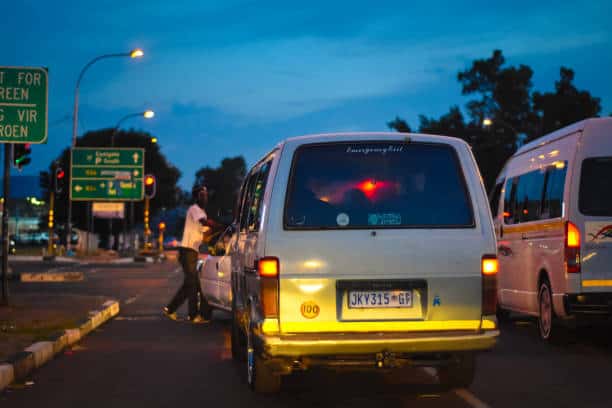

Several issues facing the taxi industry were highlighed at the South African National Taxi Council’s (Santaco) Elective Conference held this week.
Minister of Transport, Barbara Creecy, has revealed that there are 80 000 more taxis on SA’s road than there should be.
Creecy was speaking as hundreds gathered at the South African National Taxi Council’s (Santaco) Elective Conference on Tuesday. The conference was held to elect new council leadership and ventilate the many issues facing the taxi industry.
Among these was overcrowding.
“Now, in our assessment, there is currently an oversupply of approximately 85 000 minibus taxis on the road, creating unproductive competition and oversaturation of routes.
“This calls for urgent intervention by the industry itself. That will ensure balanced route allocation, improved profitability and long-term industry sustainability.”
20 taxis on one route
She explained that where ten different taxis work on one route, ten more would be assigned to the exact same location, making it more competitive for drivers who want to reach their financial goals for the day.
“So the taxis compete with taxis. You used to have 20 customers, and those customers were shared between 10 taxis, but now are shared between 20 taxis.”
She emphasised that it is up to the industry to ensure balanced route allocation, improved profitability, and long-term sustainability.
Key part of SA transport sector
Creecy hailed the taxi industry as “a key part of the national transport landscape.”
“It is also one of the largest black-owned centres in the country, with its revenue estimated at between R60 and R100 million per year.”
She expressed her appreciation for the industry that transports 8 out of 10 commuters, and noted the issues hindering growth in the sector.
Taxi violence
The annual Gauteng province Santaco report highlighted the obstacles the industry faces and outlined strategic priorities the organisation intends to implement to improve the state of taxis operating in Joburg.
According to the Centre for the Study of Violence and Reconciliation (CSVR), the minibus industry has been plagued by violence amongst many challenges that affect operators, drivers, commuters and motorists on the roads since the 1980s.
Violence and instability are still seen as a major challenge that not only affects operators and drivers, but also passengers and those on the road.
“We have been holding annual meetings between myself and the minister of police and the industry, to improve responses to taxi violence, which takes so many lives each year.” Barbara Creecy said.
Operating licences
Another issue was operating licence backlogs that hinder efficient transportation practices, disrupt operations, and cause drivers to risk driving without a permit as they await their licences.
“It is indeed the lived reality of you all. The majority of provinces have terrible backlogs with operator licenses. That makes your lives extremely difficult, and makes it extremely difficult to regulate the allocation of rules.
As a department, we are working with the national public transport regulator to oversee and monitor the performance of provincial regulatory entities to improve operating licensing.
“And I have to say to you here, we haven’t been doing a good job in that regard,” she said.
Finances
The report also highlighted the financial constraints that limit financial resources and impact the organisation’s ability to fully execute its mandate.
“And we know that there are pilot projects operating digitisation of the fare system here in Gauteng, we’ve got to look at how we introduce that elsewhere,” Creecy noted.
Operational pressures, including tight timelines and organisational demands, also place strain on leadership and structures.
The Hlokomela Campaign
The Hlokomela Campaign is an initiative established by Santaco to promote road safety and reduce accidents in the taxi industry by emphasising the importance of vehicle maintenance, adherence to speed limits, and responsible driving behaviour.
Santaco president, Mothlabane Abnar Tsebe, expressed his deepest condolences towards the families of those who lost their lives during separate incidents that took place earlier this week.
In Mpumalanga, a taxi and a bus collided, claiming the lives of ten people. In another incident in Katlehong, three others related to the taxi industry lost their lives due to violence.
Women in the taxi industry
On Monday, the Santaco Women Conference took place, where women leaders and delegates from all nine provinces elected new national leadership for the next four years. Duduzekile Maphumulo was elected as chairperson.
According to Santaco, the conference forms part of the organisation’s broader transformation agenda aimed at strengthening women’s leadership and participation within the public transport sector.