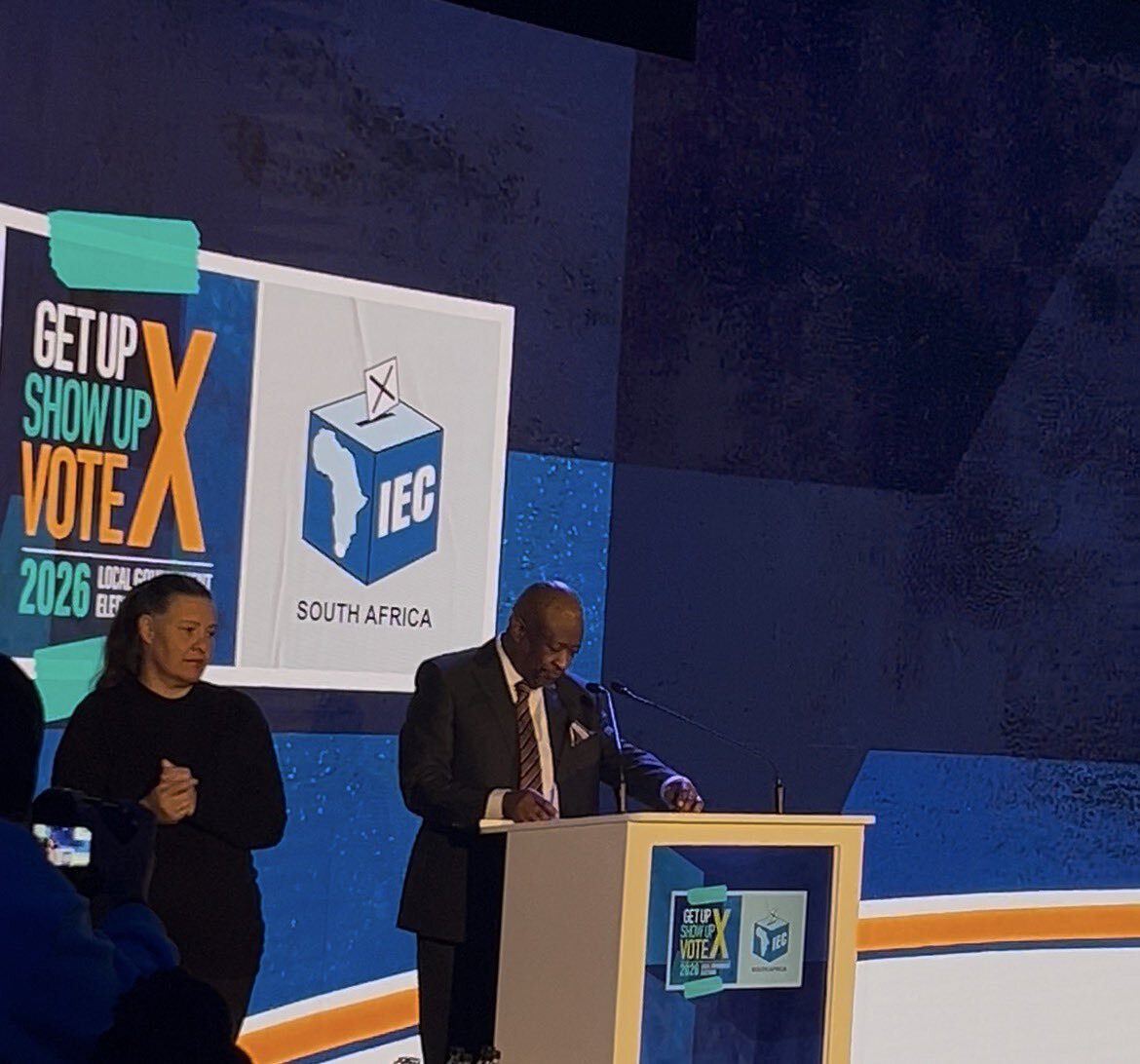

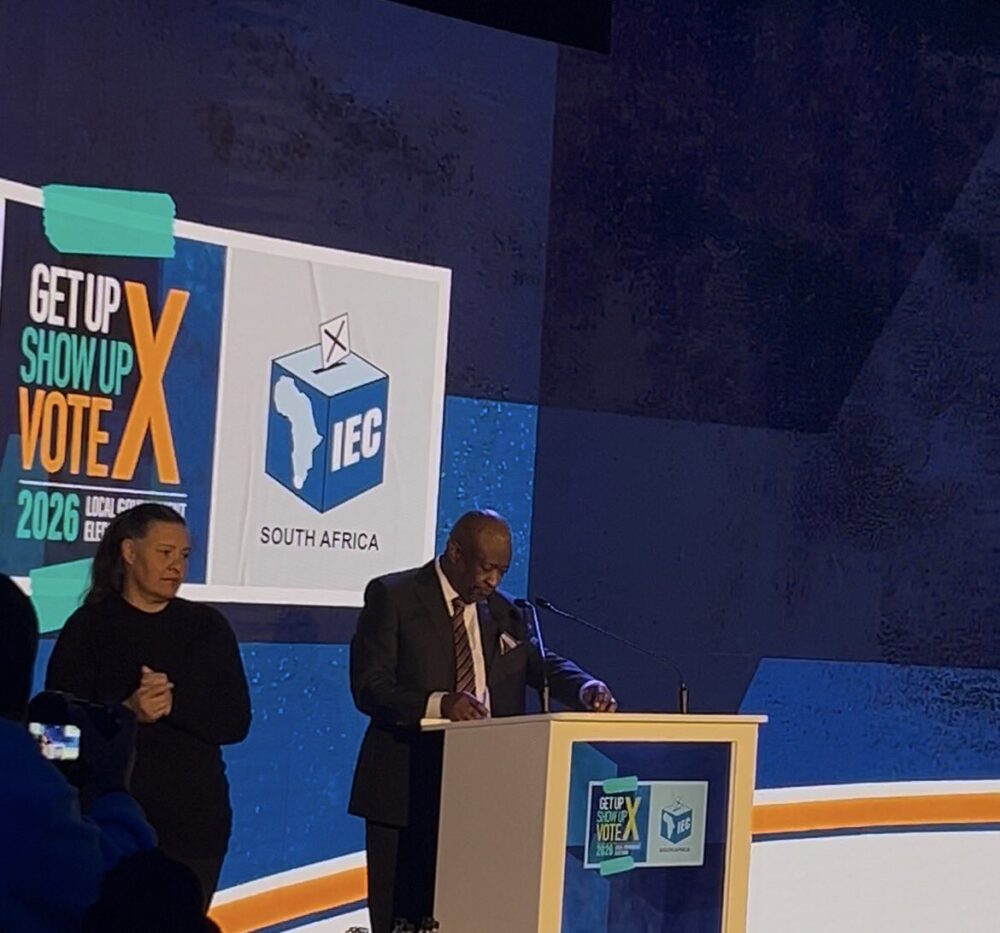
IEC chief executive, Sy Mamabolo. (IEC/X)
The Electoral Commission of South Africa’s (IEC) chief executive, Sy Mamabolo, said the online voter registration portal recorded 376 000 new voters between January and May, with most users being young South Africans, “our primary target of this campaign”.
“The total number of registered voters currently stands at 27.9 million South Africans,” he said.
“This means that the online registration portal has directly contributed to an increase in the voter’s roll. The size of the voters’ roll now exceeds the figures as they stood in the general elections in 2024.”
President Cyril Ramaphosa announced 4 November as the local election date. Mamabolo said that the IEC loses 34 000 voters a month because of mortality rates.
The IEC launched a youth-focused edutainment series, “Beats for My Peeps”, which uses music, culture and digital creators to address voter disengagement, dispel misinformation and promote electoral participation.
Mamabolo said the programme will air on SABC1 on 3 June at 18:00 in collaboration with the Department of Basic Education, the IEC and the SABC.
The IEC unveiled its election logo in April with the tagline “Get up, show up, vote”, aimed at motivating eligible voters, particularly young people, to participate in elections.
“We are sharing with all South Africans our communication campaign through which we hope to create awareness and enthusiasm about the importance of electoral participation,” he said.
Mamabolo said elections are “an incontrovertible ingredient to deepening democracy” and that democratic vitality depends on voters casting their ballots on 4 November.
The IEC also launched a podcast in April on its YouTube channel and introduced a media app for journalists to submit questions and request interviews with IEC officials.
He said the IEC recorded 64 000 citizen interactions across voice, email, live chat and social media channels.
Additionally, between 11 and 24 March, the IEC completed a targeted door-to-door voter communication and registration campaign across 212 municipalities, resulting in 300 000 newly registered voters.
“Just under 24 000 registration stations across 4 488 wards will open over two days to enable citizens to register, verify personal details and ensure correct registration,” he said.
With the first voter registration weekend set for 20 and 21 June, Mamabolo said preparations with the Department of Home Affairs were at an advanced stage.
“Since the beginning of this year, we have conducted more than 62 000 community events across the country, reinforcing sustained voter education and public engagement,” he said.
“This level of engagement would not have been possible under the previous model of periodic activation.”
While social media has a wider and more instantaneous reach, Mamabolo said it is also prone to manipulation and distortion, which could undermine information integrity.
“We have previously mitigated the bane of disinformation through, amongst others, collaboration with civil society on flagging and reporting disinformation through the 411 platform,” he said.
He said the IEC will publish a draft code of conduct on misinformation for public comment, aimed at strengthening protections against fraudulent and manipulated content.
IEC chairperson Mosotho Moepya said the commission’s innovation reflected an institution that recognises a hybrid media system with a strategic focus on youth.
“Our new initiatives seek to transform communications from a periodic information broadcast into a continuous national dialogue,” he said.
Moepya said the IEC intends to counter political alienation by embedding electoral participation into the daily media ecosystem.
IEC commissioner Glen Mashinini said that although the launch included a television commercial campaign, the commission’s broader activities are aimed at highlighting “a collective and individual responsibility to contribute to the constitutional project of our country and to our posterity”.
“This launch signifies an important commencement of a mass campaign by the electoral commission for citizen participation in the electoral process. It is one of the major milestones on the journey to the November 4 2026 local government elections,” he said.
Mashinini said the local government elections “fortify the legitimacy” of elected representatives and shape community service delivery.
“And for this reason, local government elections, as sometimes implied, are not secondary elections; instead, they are foundational to the health and vitality of our democratic order,” he said.
He added that while the IEC facilitates voter participation, political parties, as stakeholders, also contribute to the success and legitimacy of electoral democracy.
“The electoral commission appeals to all stakeholders to continue to work collectively to preserve the integrity and peaceful character of our 2026 local government elections,” he said.